Working together…

No, we’re not getting married or running for office. Lol!

The picture you see here is one of me and my ex-husband, walking down the aisle together as co-parents at our eldest daughter’s wedding this past December.

It took us a few years to get to this point, time I’m hoping many of you who are newly divorced will not waste on parenting against each other instead of with each other.

No, we’re not the perfect co-parents after our marriage ended as the picture above may insinuate. We are not nor will ever be perfect at co-parenting. However, we can learn to work together instead of expending energy working against each other.

I don’t know about you, but as I get older, I have less and less energy to spend on arguing and fighting with anyone, much less the father of my children.

Besides the personal health benefits of not being in a tug of war with your ex-partner/spouse, your children are the ones who benefit most from an amicable co-parenting situation.

And this is the key point here, that your children deserve to have two parents who work together to ensure the best outcome for each of their children despite possibly having their own personal, less than favorable thoughts and opinions of their ex-partner/spouse.

So learn from me. Don’t spend your time negating each other. Find a way to harmonize whatever time you have to co-parent with your ex-partner/spouse and find it in yourself to be the bigger person, if you have to, in order for your children to have peace of mind and heart that they are loved and taken care of by both of their primary caregivers.

A win-win situation for all.

**Disclaimer:

Please note that I recognize there are many situations in co-parenting where the other person is simply absent, non-cooperative, abusive, dangerous and manipulative. I am by no means stating that you have any control over how the other person is behaving nor that you should subject yourself and/or your children to abuse, danger and/or physical harm. Each situation and each family is unique. Please seek professional help if you feel you and/or your children are in danger.

Besides 911, I have provided other helpful phone numbers below.

National Domestic Violence Hotline: 1-800-799-7233

National Sexual Assault Hotline: 1-800-656-4673

National Suicide Prevention Lifeline: 1-800-273-8255
Anger isn’t always bad.

Anger gets a bad rep. Counselors, psychologists and just people in general have a hard time addressing anger at its core. Often times anger is dismissed and “underlying emotions” are addressed as the core emotions. 

Sometimes it’s true that other core emotions such as fear, sadness, anxiety, and such are actually the root of the anger displayed. But this is not universally and always true. Sometimes anger is just anger. Pure, raw, powerful and full of energy.
Can we try to accept anger for what it is and instead of dismissing it, channel it into something productive and life changing? This is a challenge I want to put out there to you. Instead of dismissing the anger you feel, channel its awesome energy and power into something useful in your life and try to make a positive change using your anger as fuel for your transformation. Empower yourself by telling yourself it’s okay to feel anger as long as you use it for good instead of destroying yourself and your relationships with others. Stop believing you don’t have control over your ability to take charge of your feelings. Feel your feelings, all of them. Don’t label them as good or bad. Just feel. And take the energy each feeling produces and channel it in a meaningful way so that you can make a positive difference in your own life as well as the life of the community in which you live.
There is no such thing as a “bad” feeling. All feelings are valid and equal in their ability to be useful or destructive. You get to choose how you will use your feelings. YOU are the one in charge. Breathe. Observe. Think and reflect. And then…Carry on. 
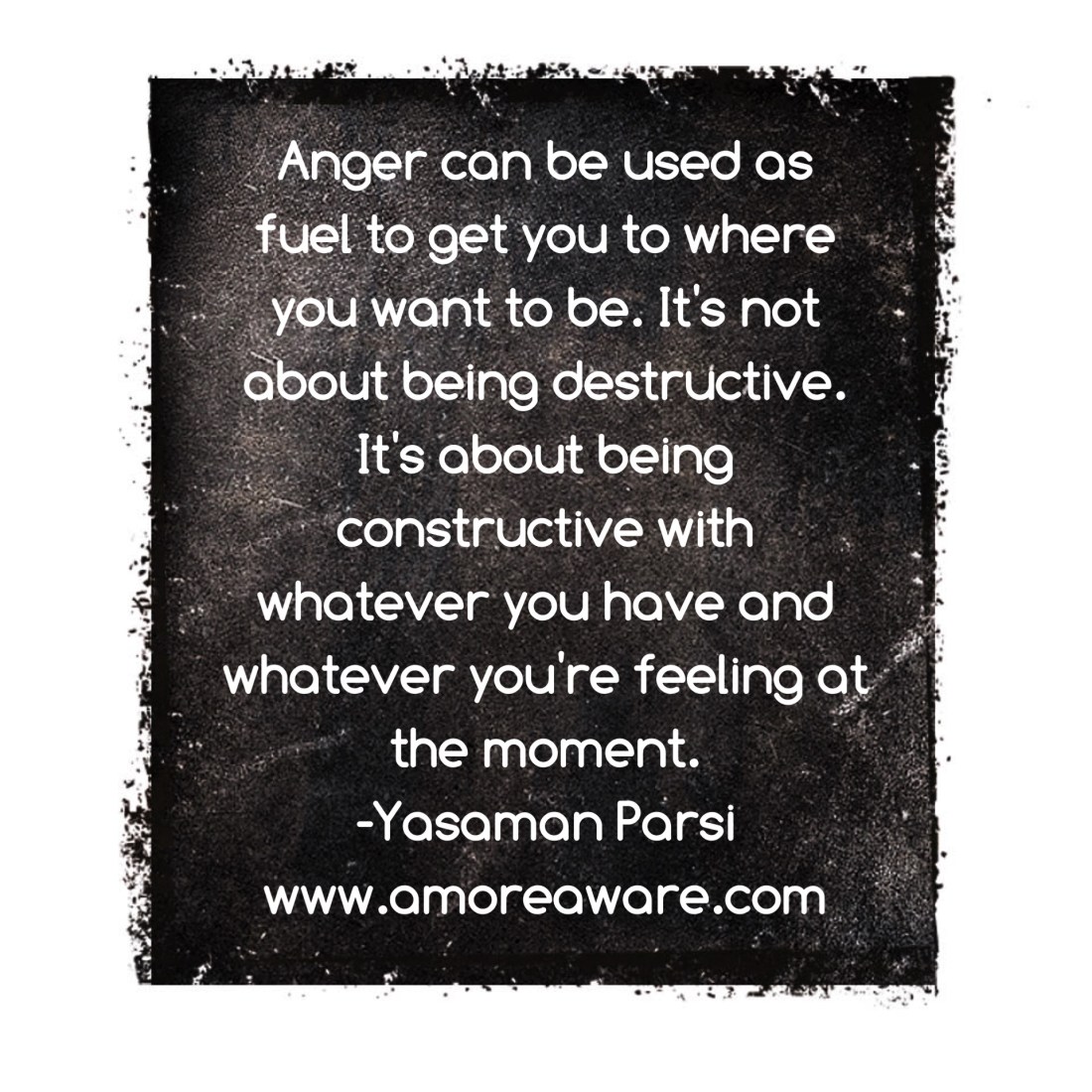
Lesson: Anger can be used as fuel to get you to where you want to be. It’s not about being destructive. It’s about being constructive with whatever you have and whatever you’re feeling at the moment. Believe me, I’m a counselor. I get angry and it pisses me off when my anger is negated or villianized. Being pissed off is life’s way of giving you a little shot of caffeine so you can get off your ass and do something different. Don’t be calm. Rage on and conquer your life! 

Don’t wait…

We often wait for life to be this way or that way before we make a move or do something we’ve always wanted to do.

The truth is that life will never be exactly the way we want it to be, it will never be perfect.

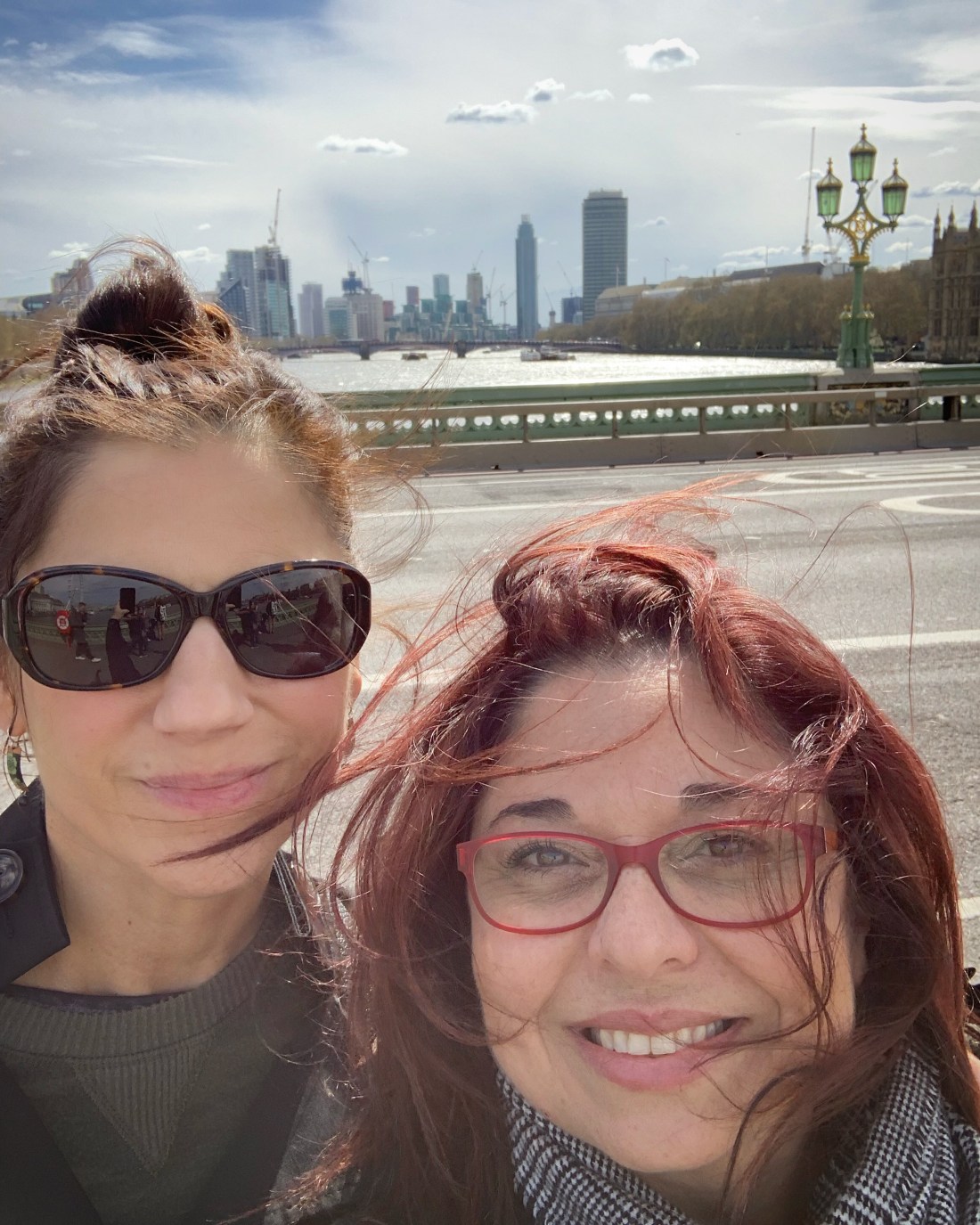
Life is messy. The winds will blow. Your hair will be messy. The sun will come out. Live and love anyway. Take pictures anyway. Live now. Follow your passions. Follow your heart. Don’t wait.

Perks of being a counselor: knowing there is no such thing as a perfect time or perfect life. The only perfection is how perfectly imperfect we all are. ❤️

Timelines

Sometimes you accidentally run into timelines of other people that match up with your old timeline. However, their timeline continues uninterrupted while yours takes a departure from your projected and estimated trajectory. It’s always a little jarring when you see the timeline that’s uninterrupted and start comparing it to yours. You start wondering if maybe this uninterrupted timeline could have been your life and then you look for where things changed. It’s an exhausting and defeating process. It presupposes that one single act can determine the fate of your timeline. It also presupposes that one outcome is better than another.


Life is not like that. If it were, there would be an antidote or a counter action that would protect you from that other “action” that is the determining factor in the change of trajectory. (Now I’m getting into Quantum Physics, which I love by the way.) 😉

In reality, there is no way to pinpoint a single moment when things change. While there are single events that change us forever, life is a continuous flow of moments that lead from one to another. Every time I have tried to look for that single moment, I have had to look at the moment before that and the one before that and on and on and on. It is actually easier to look forward and change actions in present mode for future benefit.

So where’s the perk?

I suppose the perk of being a counselor in this situation is to know at any given moment you have the power to change the future.

Burning Bridges

As a counselor I have hope in almost everything and everyone. It is also who I am as a person. Some would argue I have too much hope and see life with rose colored glasses despite all that I have personally experienced and all that I have heard about the grief of others, “la vie en rose,” (listen to this song if you ever have a chance).

All I know is that I have always had the presence of the “Divine” or “higher power” in my life. Even in my loneliest, I have truly never been or felt alone. However, having said this, I have learned a lot in the last few years about having hope in every situation and everyone. 

Lesson 1:
Everything and everyone has the potential of change but not everything and everyone will reach that potential in a timeline that we are able to witness.
Lesson 2:
When we choose to leave certain people and things in the time and space they belong and occupy, we are not forgetting them and their time with us. We are operating with the virtue of justice by letting people occupy their space and time and allowing ourselves to move on and occupy our own space and time. 
Lesson 3:
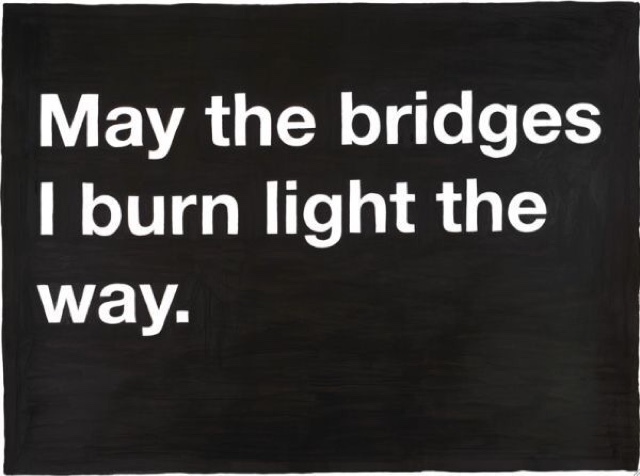
We need energy and fuel to power our way through our new, and most likely, different journey. We cannot exist simultaneously in two or more dimensions of time without severe exhaustion and lack of motivation. We have to choose, and sadly, sometimes our fuel and guidance comes from the light provided by the bridges we burn to our past. 
Lesson 4:
While you may choose to return to an older period of time, you have to remember that you return as a changed person and therefore will possibly, and in all likelihood, have different reactions and behaviors. Don’t be surprised if you realize something or someone from your past isn’t as interesting or is more interesting than you thought originally. 
Lesson 5:
There is a lesson in everything. Find it, especially when you have the least amount of understanding of what’s going on. It will always shed light on a situation. 
Lesson 6:
Hope applies to everyone. It’s an equal opportunity concept. If you have hope in every situation and everyone else, that means there is also hope for you and your situation. You are not the exception to the rule. 
Lesson 7: 
There are connections between every act, person, thing and situation. Find what the connections are. They are the yellow brick road that will lead you to the treasure at the end of the rainbow. 
Once again, I’m not saying anything you can’t think of or haven’t possibly thought of yourself. I just happen to be trained to look for these things as part of my job and in my own life. You can become this aware as well.
In fact, you might already be. 
I am grateful for this kind of awareness. It is most definitely one of the perks of being a counselor. 

Leave if you must…

Sometimes we have to leave. We are the only ones we can control and so it becomes our duty to leave a situation that is not healthy or is unjust. 

When people refuse to respect your boundaries, leave. I’m not saying don’t try to work it out by discussing it, but if there is no chance of a healthy discussion, leave. Leave people, places, things, jobs, doctors, relationships, friendships, homes, exercise routines, clubs, whatever you can think of. 
A quote comes to mind…
I think it goes something like this, “You’re not a tree. You can move.” There is no law that says you have to continually endure unhealthy situations. Move. Leave. Walk away.
Perks of being a counselor?
Being able to give myself permission to practice what I preach. I’m out. 👊🏽

Silence

There are some times in our life when there is just no answer to our questions, no relief, no closure.

As much as we would like to find peace in an answer, the only way we may ever find peace in such times is through silence.
Practicing silence and sitting at the table with your lack of clarity may be all there is one can do. So go ahead. Pull up a chair, sit down across the table from your pain and sadness. Look them in the eye, not with judgement and blame, but with love.
Sit in silence and send love across the table to what you’ve lost, what you mourn. 
The human language is incapable of labeling such times and feelings which may be why you feel you have no answer to your questions, no response to your pain. The language of the soul is complicated. It’s not about a label or word because the soul is processing so many things simultaneously. However, the soul comes alive and feels seen and heard in the moment when you look at the soul and recognize it and “see” it through someone’s eyes. It can definitely be seen and acknowledged. And if you’re capable of sitting at the table with your own soul, and without any words acknowledge your own pain and sorrow and sadness and love, then maybe you will have found an answer after all.
Perk:  silence is an answer; no response is a response; no action is an action; acceptance of what something is, is acceptance of what it is not. With silence you can make the loudest statement of all. 

You don’t have to.

“No.” That’s a full sentence.

I have worked with many clients who have a hard time saying “no”. Many of my clients are women. And in our society, women saying “no” is less acceptable than men who say “no”.

So I thought I’d make a short list of ways you can say “no”, whether you’re a man or woman, boy or girl.

Ways to Say ‘No’:

  1. No.
  2. I’ll have to think about that.
  3. I can’t, but thanks for asking.
  4. I don’t have time.
  5. I’m unable to do that.
  6. Not this time, maybe next time.
  7. I’m not sure I have the expertise in that area to help you.
  8. I did it last time. I would appreciate us taking turns.
  9. I’m busy, maybe next time.
  10. That date doesn’t work for me, but how about this one?
  11. I’m not interested in that.
  12. I don’t want to.
  13. No, but thanks for checking.
What are some ways you’ve learned to say ‘No’?

Perfectly imperfect

We have to stop this search for perfection.

It’s destroying our ability as a society to address what needs to be addressed, namely that there is a lot of suffering in this world.

When we enter a situation with a preconceived structure for how it’s all “supposed to” be, our brain filters out all other information in order to fit the situation into the model we have created with which we are trying to look at the world.